
Red-necked phalarope - A welcome visitor
A Bird That Read the Rulebook Upside Down — Every so often nature produces a species that seems to have skimmed the "how to be a bird" manual, misunderstood most of it, and decided its version was better. The red-necked phalarope (Phalaropus lobatus) is exhibit A. It is small, dainty, exquisitely patterned — and almost everything about its life is done backwards.
Ladies First, Emphatically — In most of the bird world, the male wears the flashy colours and the female wears sensible brown. Phalaropes said no thanks. The female sports the bold brick-red neck and bluish-grey head that give the species its name, while the male is left in duller, scruffier plumage — the avian equivalent of being handed the leftovers at a wedding. It doesn't stop at fashion. Female phalaropes court the males, and once eggs are laid, mum's job is done — she's off, sometimes to find another mate, while dad is left to incubate the eggs and raise the chicks solo. Somewhere out there, a colony of exhausted single phalarope fathers is quietly judging the rest of the animal kingdom.
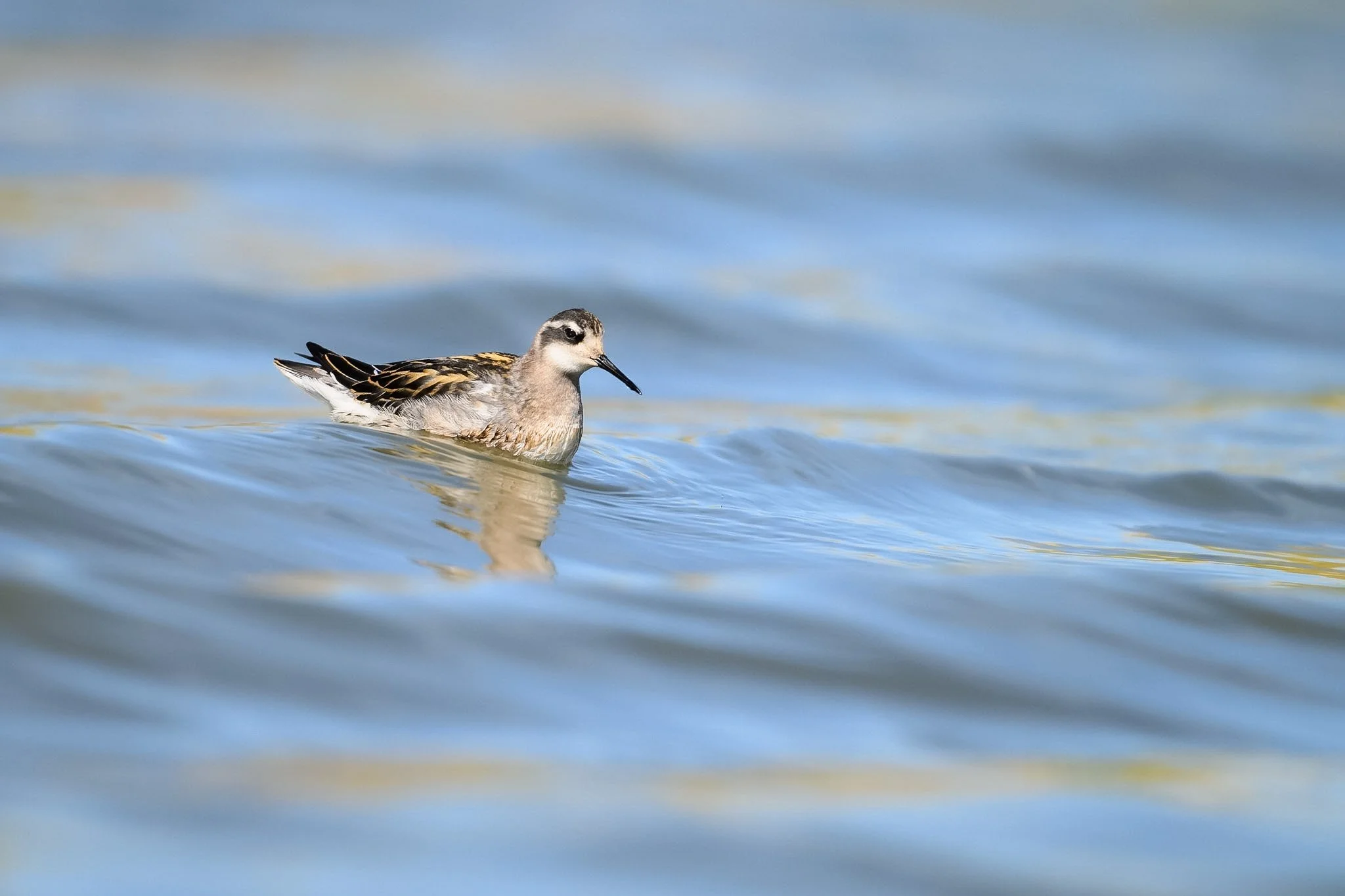
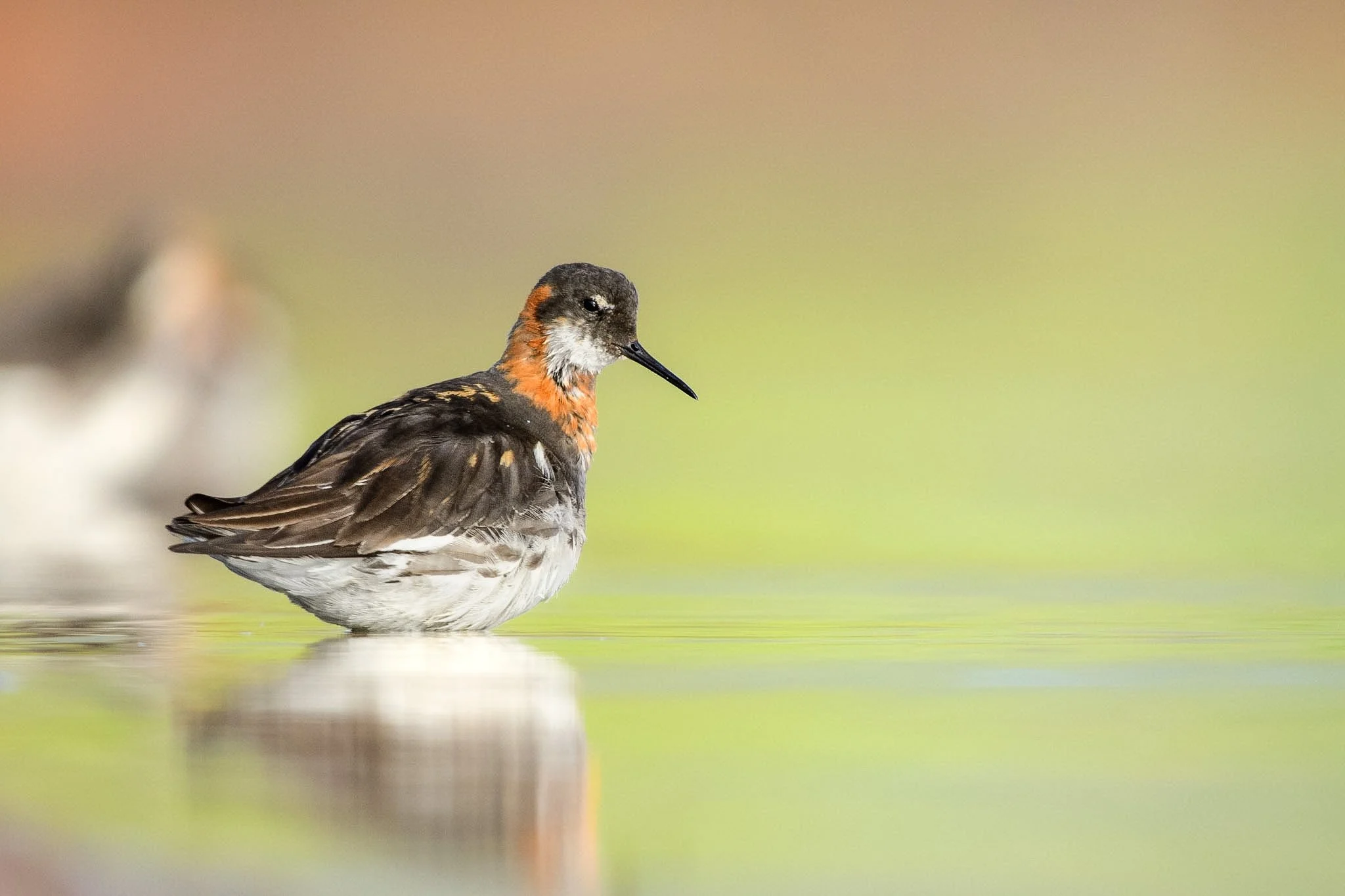
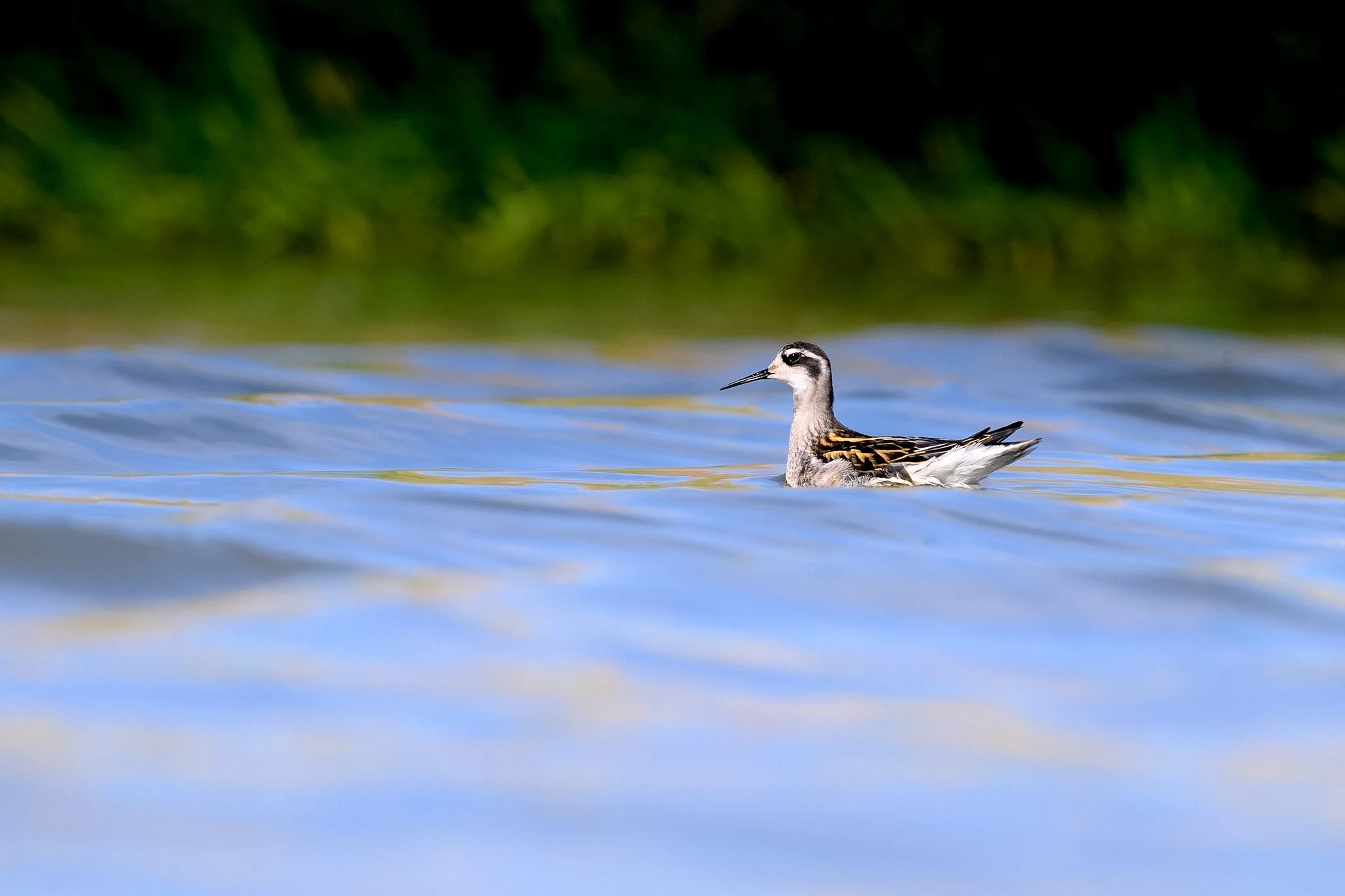
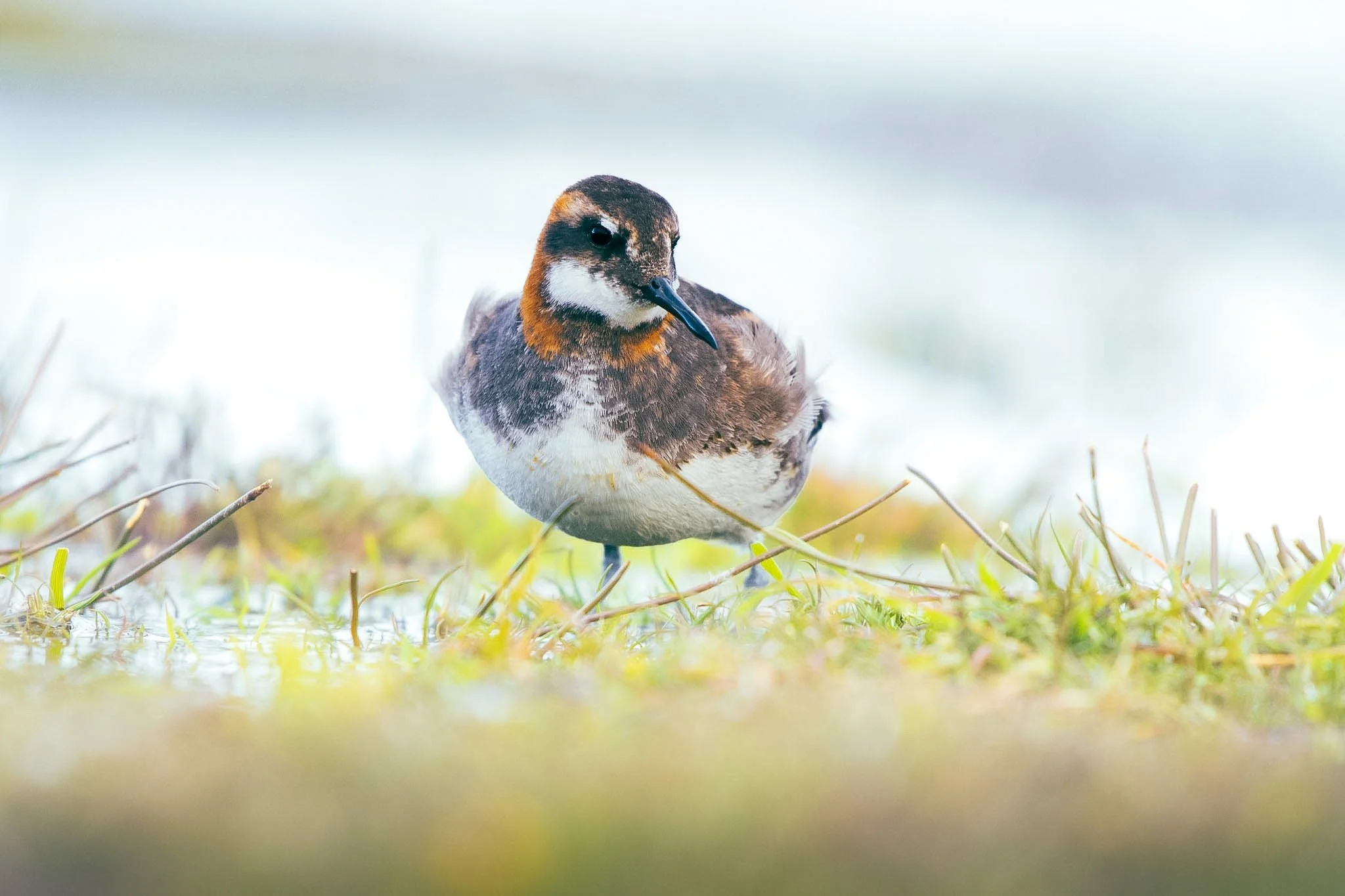
The Spinning Soup Enthusiast — If you do spot one bobbing on the water near Copenhagen or across in southern Sweden in late Summer, watch it for a minute — it's worth it. Phalaropes feed by spinning in tight little circles on the surface, whipping up a mini-whirlpool that stirs invertebrates upward within pecking range. It looks less like foraging and more like a tiny, extremely committed toddler stirring soup with a spoon, utterly convinced this is the correct way to eat lunch. It is, somehow, a very effective hunting technique — just don't expect it to look dignified.
Most waders are creatures of mud and shoreline. Phalaropes are different — they're genuinely happy out on open water, and for much of the year they're properly pelagic, riding the swells of the open ocean far offshore. So when one turns up bobbing on a lake near you, you're briefly hosting a bird that would otherwise be quite content bobbing about somewhere in the middle of the Atlantic. It's basically on a stopover from a much more dramatic commute than yours.
A Fleeting, Worthwhile Visitor — Red-necked phalaropes passing through this region at this time of year are a genuine highlight — small, restless, spinning little bundles of contradictions, here today and gone tomorrow.
Birding Copenhagen offers guided half-day, full-day and multi-day tours to the key birding sites North and South of Copenhagen as well as the Falsterbo peninsula and other areas in Southern Sweden throughout most of the year. Whether you're chasing a few key species, want an easy-paced birding tour, or want to spend quality time in beautiful natural surroundings close to Copenhagen, Birding Copenhagen will put you in the right place at the right time.
Get in touch with Birding Copenhagen to book your autumn Falsterbo bird bonanza.